

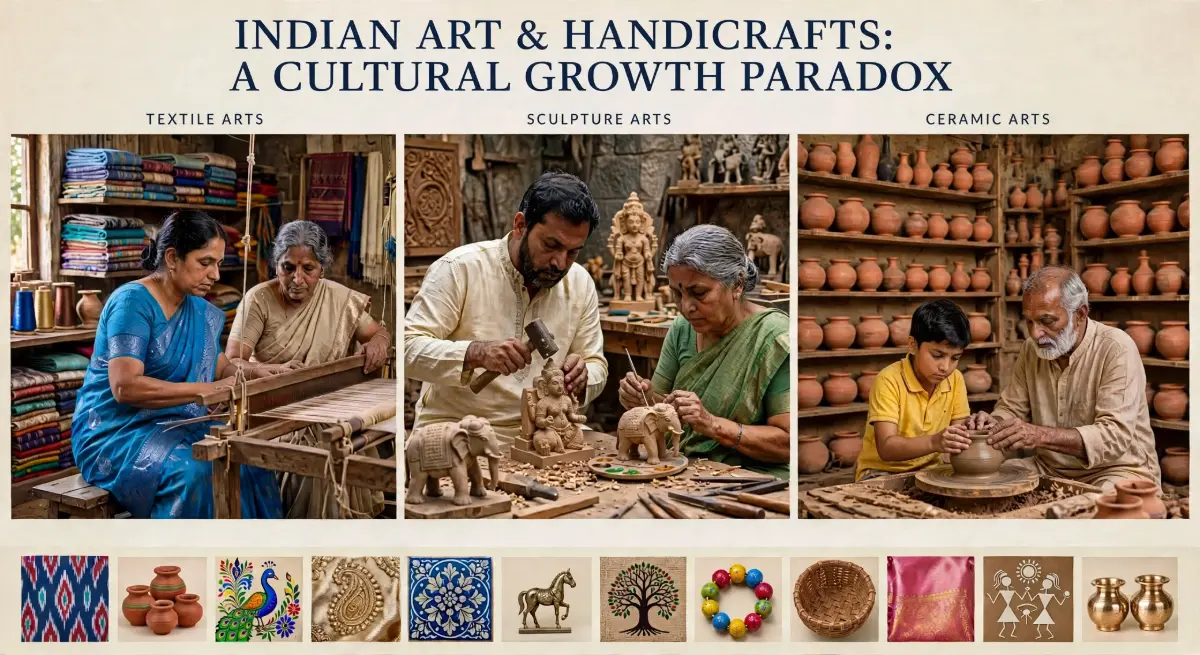
In any culture, its art and handicrafts are its iconic identity, which attracts other cultures to take an interest in it. Not only this, but they also help us to understand the deep history of that particular culture. This is a domain of any culture that not only attracts others but is also a source of livelihood for a large part of the population.
For centuries, the skills of cultural artisans have been passed down from one generation to the next, from hand to hand and heart to heart. In India, these crafts are among the largest sources of employment after agriculture, supporting millions of families. But today, this chain of inheritance is breaking. The new generation is not showing interest in learning these crafts or making a career out of them.
On the other hand, Indian handicrafts enjoy a huge market, and future estimates point to even higher demand and revenue. Indian art is in demand across the world. In this era of digitalization, the sector is not left behind in a corner either; it is actively taking part, with e-commerce giants bringing lakhs of craft sellers onto their platforms. The government, too, has launched a range of policies, subsidies, and support platforms to help and motivate artisans.
Then, where is the gap? Why is the market growing, but the new generation is walking away? And the worst part: the existing artisans are also leaving, or have already left, and are looking to other fields for their livelihood. Doesn't it look contradictory?
The Market Evaluation
Before we try to find the gap, let us first understand how big this market really is. Because when we talk about handicrafts, many people still imagine a small village business, limited to a few local fairs and roadside shops. But the numbers tell a very different story.
Across the world, people are spending more and more on handmade products. According to IMARC Group, the global handicrafts market was worth around US$986.9 billion in 2025, and it is expected to reach US$2,038 billion by 2034. People today want products that are unique, sustainable, and carry a story, and this is exactly what handicrafts offer.
India holds a special place in this market. When the Export Promotion Council for Handicrafts (EPCH) was set up in 1986-87, India's handicraft exports (excluding hand-knotted carpets) were worth just around US$302 million (₹386.57 crore). By 2023-24, this number had reached around US$3.96 billion (₹32,758.80 crore). In FY25, exports stood at around US$3.92 billion (₹33,122.79 crore), and in FY26, they reached US$3.78 billion (₹33,424.18 crore), according to provisional data.
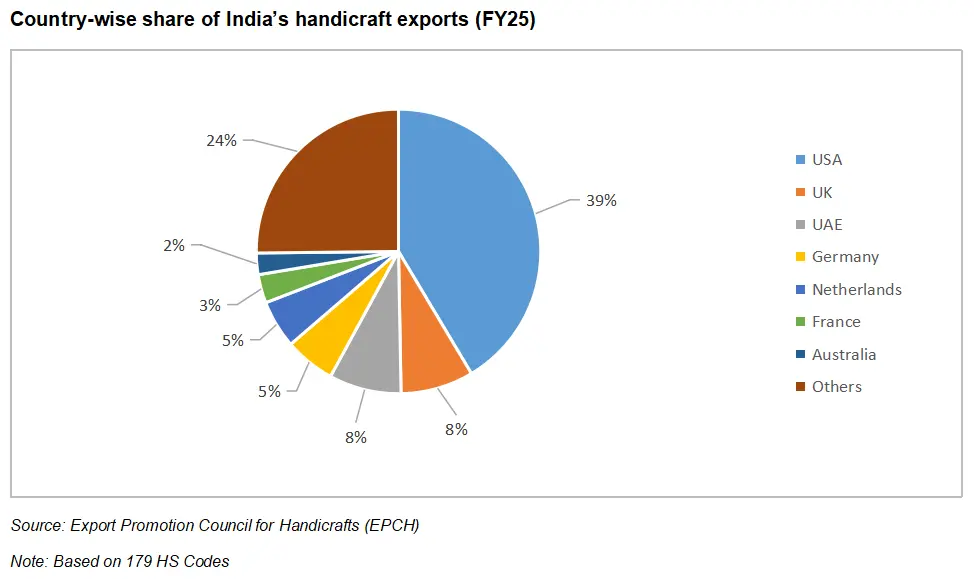
These products travel to almost every corner of the world. In FY25, the USA was the biggest buyer, taking 38.69% of India's handicraft exports, followed by the UK (7.73%) and the UAE (7.68%). Germany, the Netherlands, France, Australia, Canada, and Italy were also among the major buyers.
And what does the world buy from India? In FY26, miscellaneous handicrafts were the largest category at US$1,148.54 million, followed by woodwares (US$840.39 million), art metal wares (US$505.06 million), embroidered and crocheted goods (US$484.92 million), and handprinted textiles and scarves (US$443.24 million).
The digital era has opened another door. E-commerce giants are racing to bring craft sellers online; Amazon Karigar and Flipkart's Samarth program have brought lakhs of artisans and vendors online. Alongside this, the government runs schemes like the National Handicraft Development Programme (NHDP), the Comprehensive Handicrafts Cluster Development Scheme (CHCDS), and SFURTI to support skill development, infrastructure, and market access.
So the market is big, the world is buying, the government is supporting, and the products are going online. On paper, everything looks right. Then why are the hands behind this market still struggling? This is the question we will try to answer next.
The Ground Reality
India is estimated to have around 7 million artisans, although unofficial estimates suggest that the number may be significantly higher (approx 22 million) due to the informal and unorganized nature of the sector. This wide variation itself reflects the lack of reliable data and formal recognition within the industry.
Most of this work happens within informal and self-sustaining systems, across both rural and urban areas. Artisans are often responsible for sourcing their own raw materials, and many still follow traditional, environment-friendly ways of production.
At the ground level, the picture looks very different from the market figures. According to Ballard Brief, the average artisan earns between $3.40 and $4.50 a day. For rural artisans, it can fall to as little as $0.89 a day, and only about one-third of artisans earn a steady income. A large share of the value is taken by middlemen before it ever reaches the maker.
The Dying Livelihood
Passion, generational inheritance or interest can be a reason to enter any profession, but livelihood is what decides whether one stays or leaves. The same can be seen here. People who adopted this profession are now leaving it because it cannot fulfil the basic needs of their livelihood.
This financial struggle has already pushed many cultural artisans to leave their crafts altogether. Kenjakura in West Bengal is a painful example. According to Rahul Das, a local weaver and yarn trader who spoke to The Migration Story, around 500 families here practised tant weaving in 2018. By 2024, the number had fallen to 120, and in 2026, only 35 remain. Weavers earn less than ₹100 a day (~ US$1) from middlemen, while the cost of raw material keeps rising. Nearly half of the young men have moved to cities for low-paying service jobs, and many elders who stayed behind now work at restaurants, sweet shops, or ice cream carts. For the young, the choice is simple: a craft that cannot feed a family is hard to carry forward.
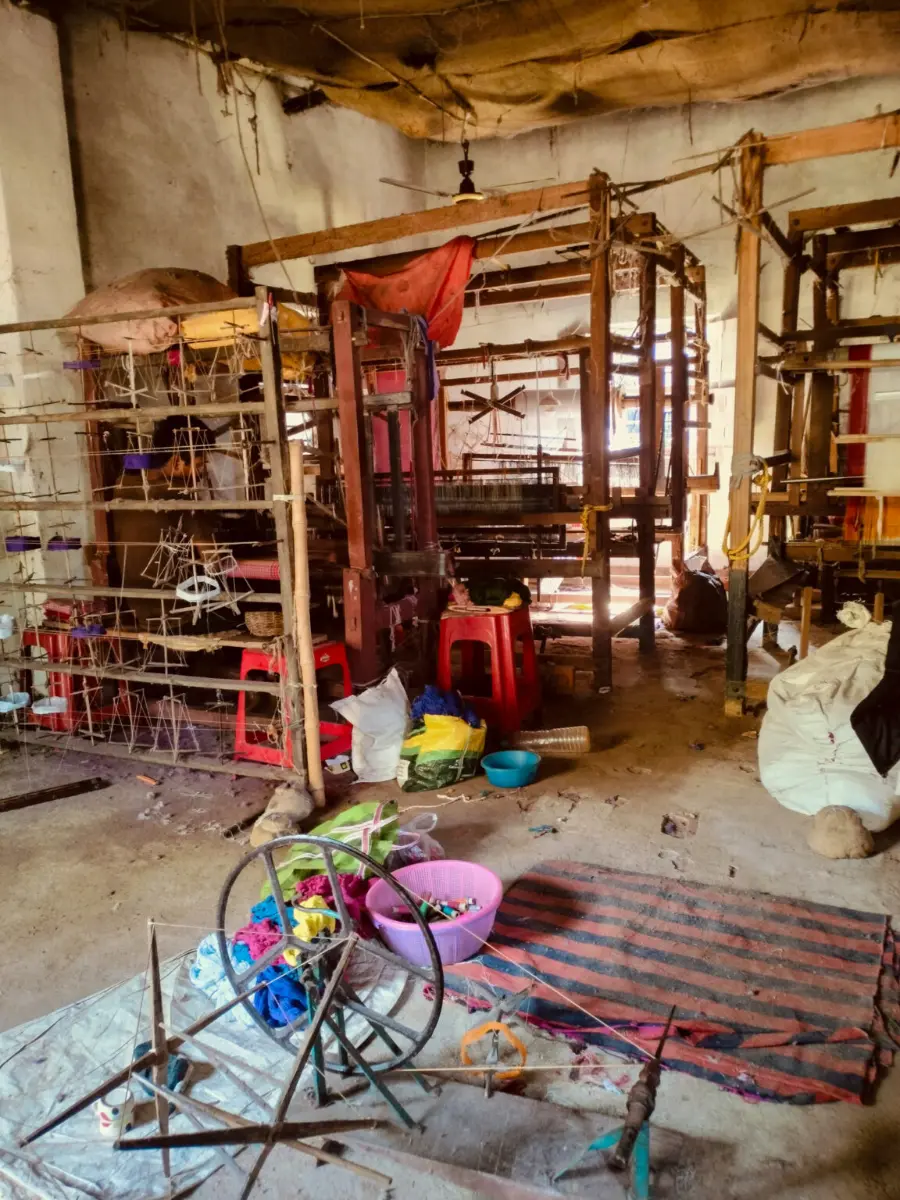
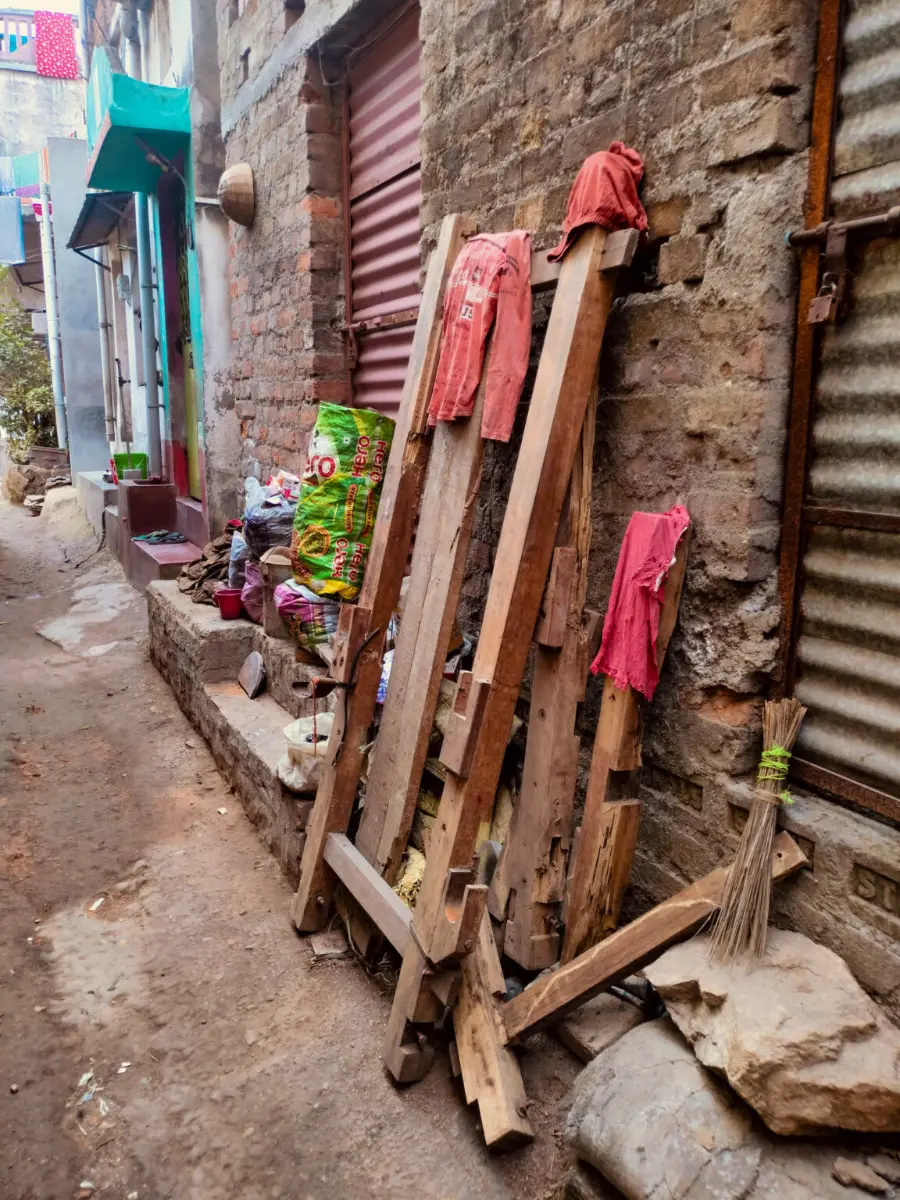
Dismantled looms in Kenjakura. (Photo: Joymala Bagchi / The Migration Story)
In 2025, the West Bengal government launched the Shramashree scheme to support returning migrant workers, but many weavers remain doubtful. As one weaver, Biren, told The Migration Story, "Schemes can never replace work. Lives will not improve through schemes alone." Their worries also include the lack of space for looms, as traditional, spacious mud homes are replaced by smaller modern houses.
Even laws meant to protect them are often ignored. The Handlooms Reservation Act reserves certain textiles, including tant sarees, for handlooms alone, and the government has bodies like the Development Commissioner (Handlooms) and Weavers Service Centres. Yet on the ground, these rules and welfare policies are poorly implemented. For the weavers of Kenjakura, saving their craft now feels like a race against time.
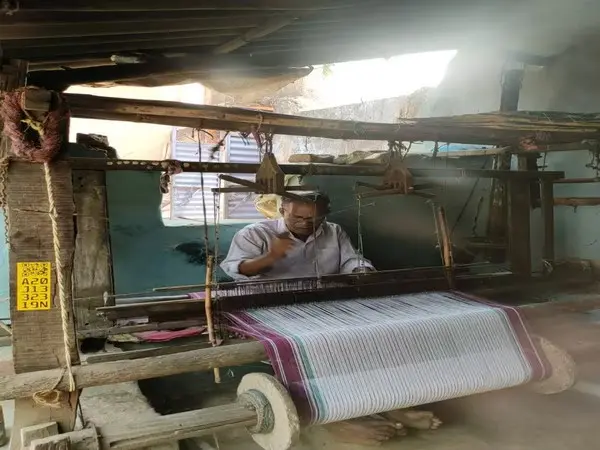
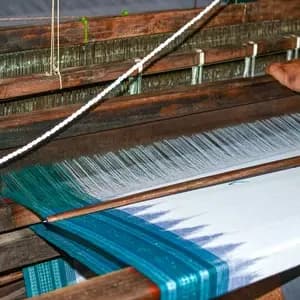
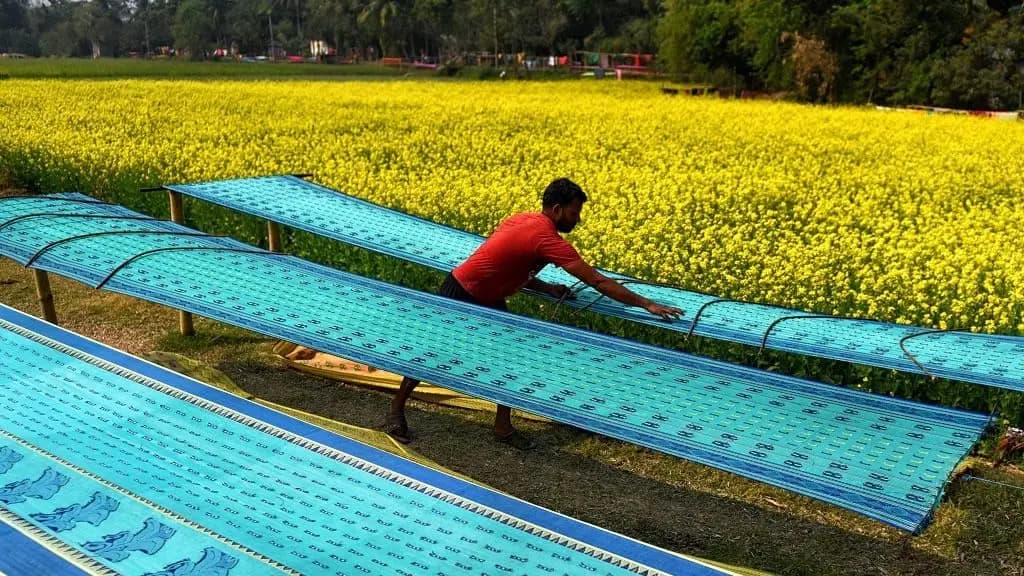
The same story can be seen in other parts of India, where these cultural arts were once a means of livelihood. Exploitation by middlemen is one of the reasons, but the reasons are not limited to middlemen alone, as we will see next.
Structural and Market Challenges
Another major challenge is the mechanization of the market. Authentic handmade goods are increasingly under pressure from cheap, machine-made alternatives and plastic substitutes that win customers through lower prices.
In Kenjakura, weavers blame the powerlooms nearby for the decline of their handlooms. At fairs like the Uttarayani fair in Uttarakhand, bamboo baskets, iron tools, and copper items that were once made with skill and care are slowly being pushed aside by factory-made products.
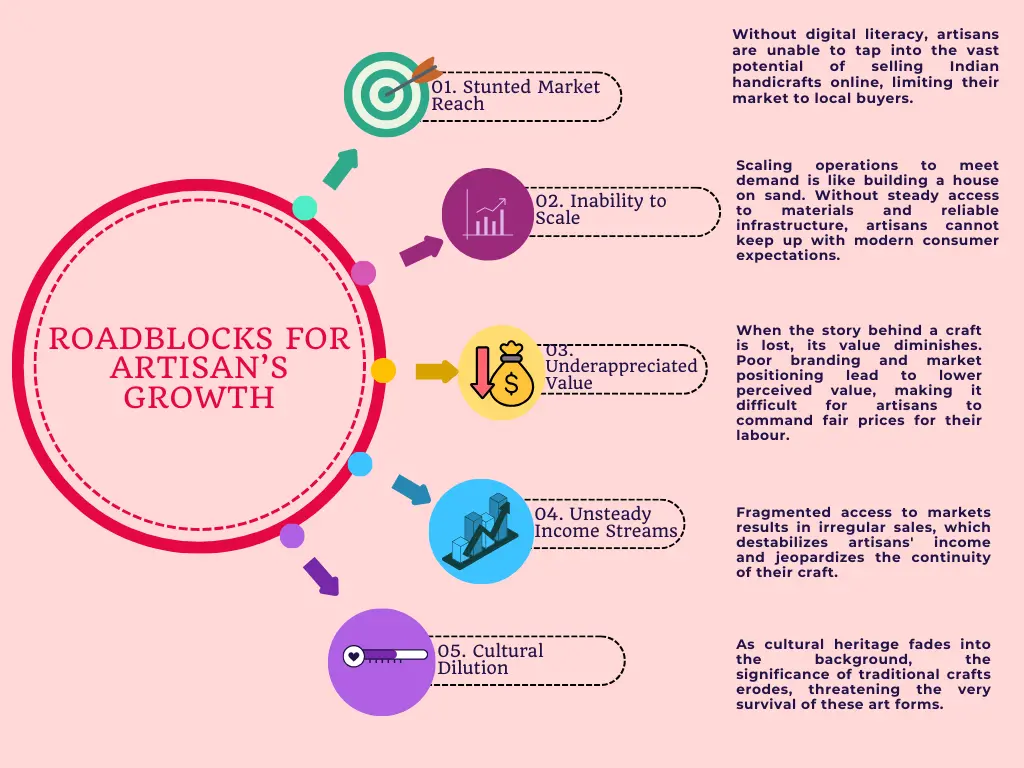
This competition is made worse by a lack of infrastructure and digital literacy. According to the Ashray Foundation, many artisans struggle to reach wider audiences or sell online, and poor infrastructure, difficulty in getting raw materials, and the inability to handle large orders limit their growth even further.
Gujarat's Kutch region shows how deep this problem runs. Its crafts are famous across the world and have been passed down for generations, yet most artisans earn very little for their hard work. Many have had little formal education or training in modern design and market trends. A study of 445 local artisans published in IJCRT found that financial problems and a lack of business and export knowledge are the biggest barriers holding them back. Even online platforms have not changed this much: of around 6,000 artisans in Kutch, only about a dozen actively sell on Amazon Karigar. As a result, most remain dependent on seasonal local demand and unorganized markets.
Additionally, a lack of strong branding makes it hard for handmade goods to compete with cheap, mass-produced items. Weak links to global buyers keep creators dependent on local, seasonal demand. As people value traditional crafts less over time, it becomes even harder for these skills to survive in today's price-driven market.
Social & Policy Gaps
Beyond the usual financial & market challenges, artisans in India also face deeper social challenges. In many cases, the profession itself is seen as low-status, especially since a large number of artisans come from marginalized communities. This affects not just their income but also their dignity and long-term motivation, and it makes the city job look like the better option. Another serious issue is the cycle of limited education - children often get involved in the craft early, missing out on learning modern skills or financial knowledge, which makes it difficult for families to grow or adapt to changing markets.
The government has also recognized the value of cultural arts and handicrafts, and both central and state governments have taken many steps to support artisans through training, subsidies, loans, marketing support, and more.
However, these policies cover only separate parts of the supply chain, and on the ground, they often fail due to poor implementation, a lack of transparency, and sudden withdrawals of financial support.
Conclusion
Taken together, these challenges are not isolated issues but part of a deeply interconnected system. Income instability, weak market access, lack of institutional support, and social barriers reinforce each other, making it difficult for artisans to sustain their livelihoods or adapt to changing economic conditions.
As a result, even when demand exists, artisans remain excluded from the value they create. This structural imbalance not only affects income but also threatens the continuity of traditional crafts themselves.
The persistence of these issues indicates that the problem is not the absence of effort or digitalization, but the absence of an integrated system that connects production, market access, and long-term support with basic social security. The new generation is walking away from learning these crafts or making a career out of them. This is why the chain of inheritance is breaking: not from lack of interest, but from lack of income.