
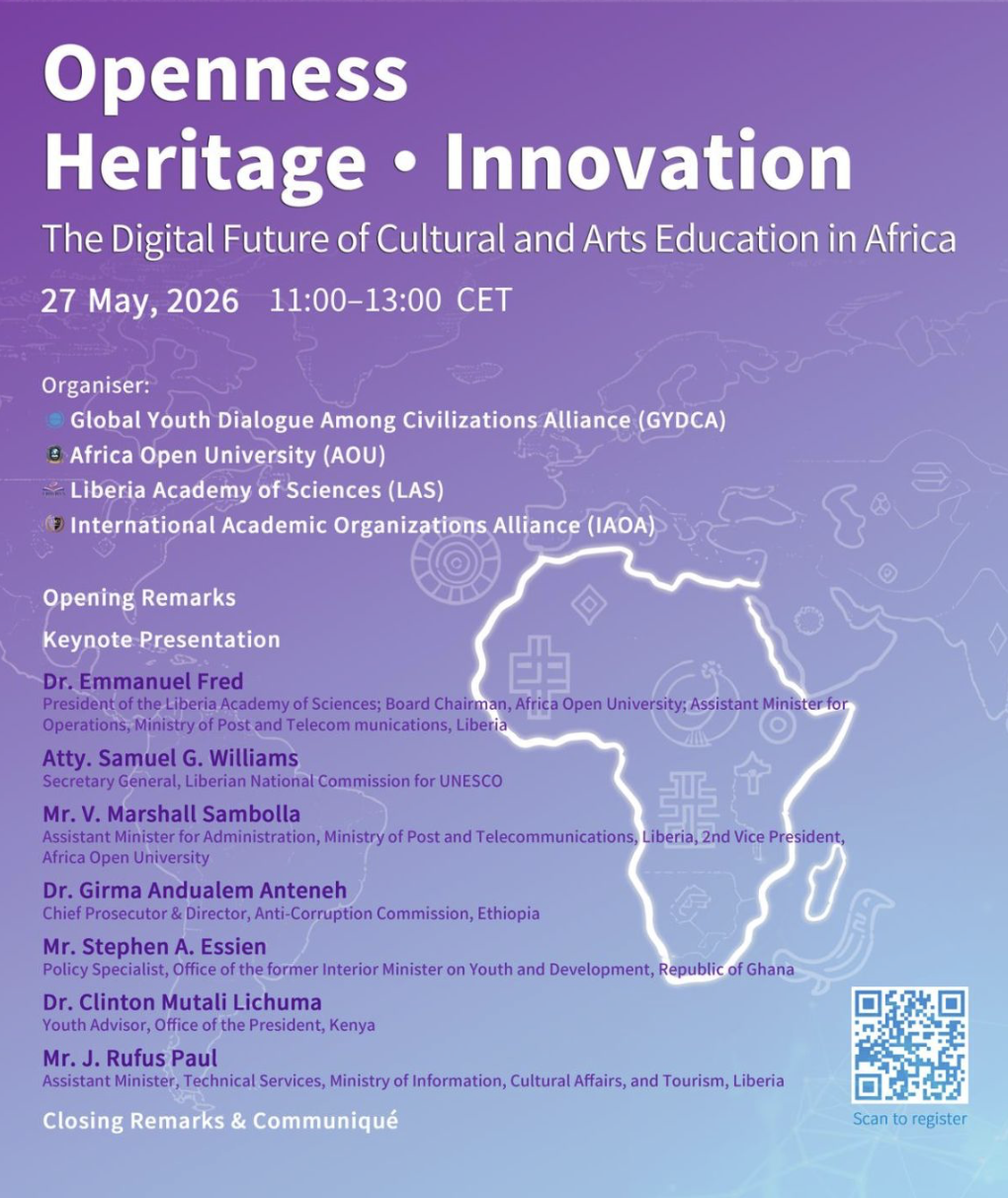
On 27 May 2026, the Global Youth Dialogue among Civilizations Alliance (GYDCA) co-organised an international online dialogue as part of UNESCO Culture and Arts Education Week, drawing scholars, policymakers, cultural practitioners and youth representatives from across Africa, Europe, Asia and beyond.
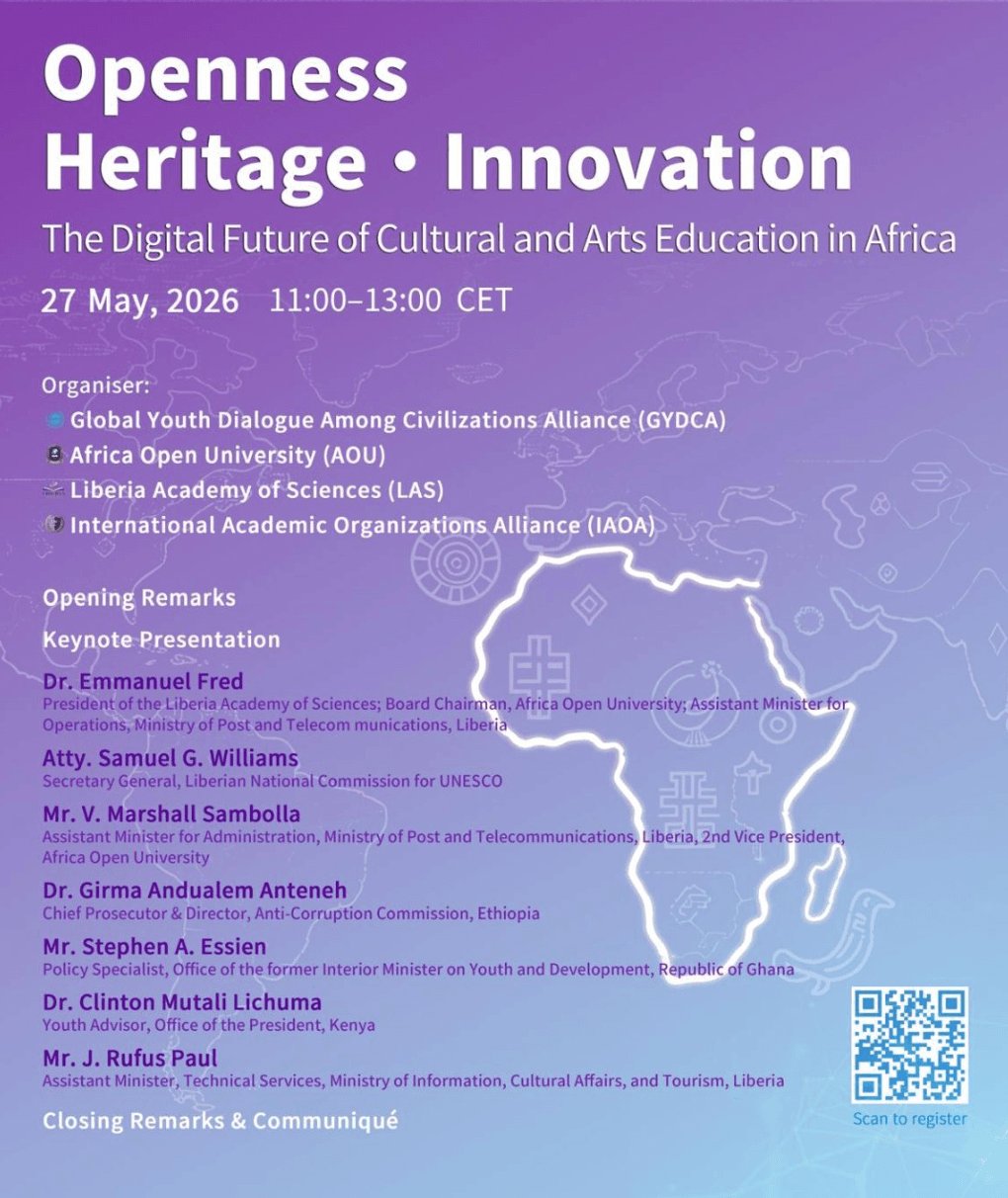
Held under the theme “Openness · Heritage · Innovation: The Digital Future of Cultural and Arts Education in Africa,” the webinar became a working platform for examining how arts education can develop in the digital age without losing its grounding in cultural identity.
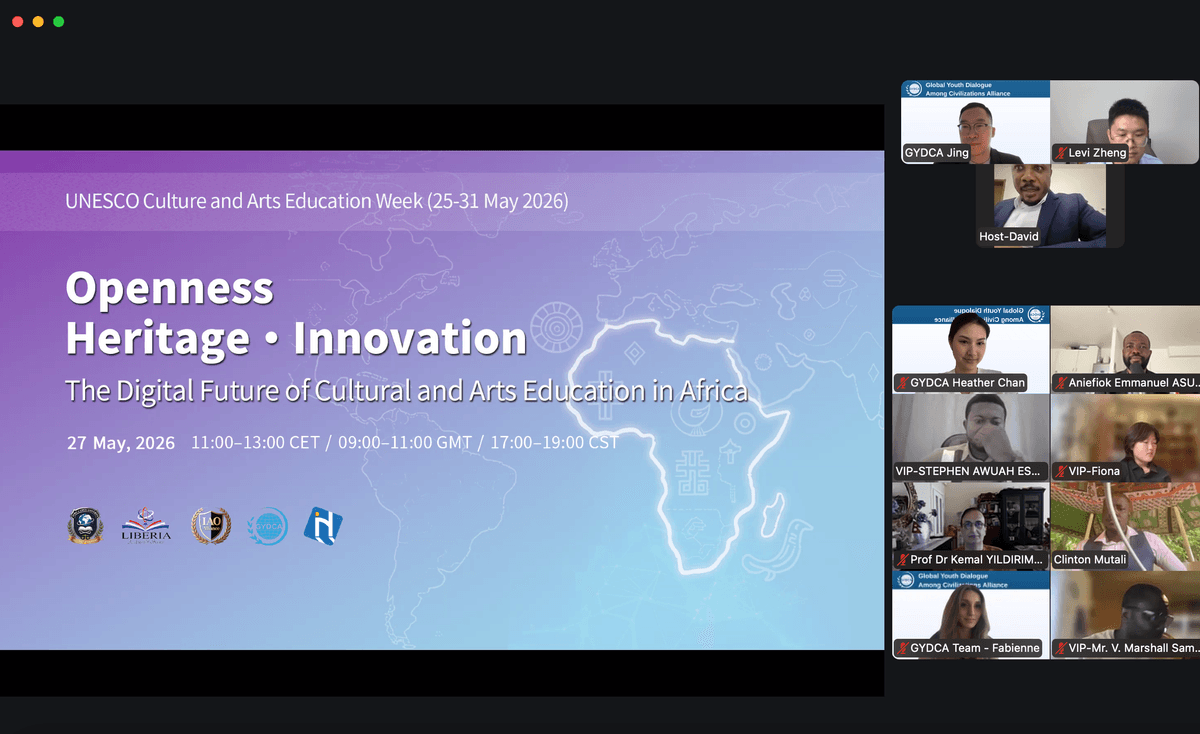
A Global Conversation Across Cultures
Moderated by Mr. Dived B. Kolleh, International Policy Advisor of the Liberia Academy of Sciences, the event brought in participants from Liberia, Nigeria, Ghana, Kenya, Ethiopia, China, Türkiye, Pakistan, Uzbekistan and across Europe — a spread that reflected a shared commitment to intercultural understanding, cooperation and youth engagement.
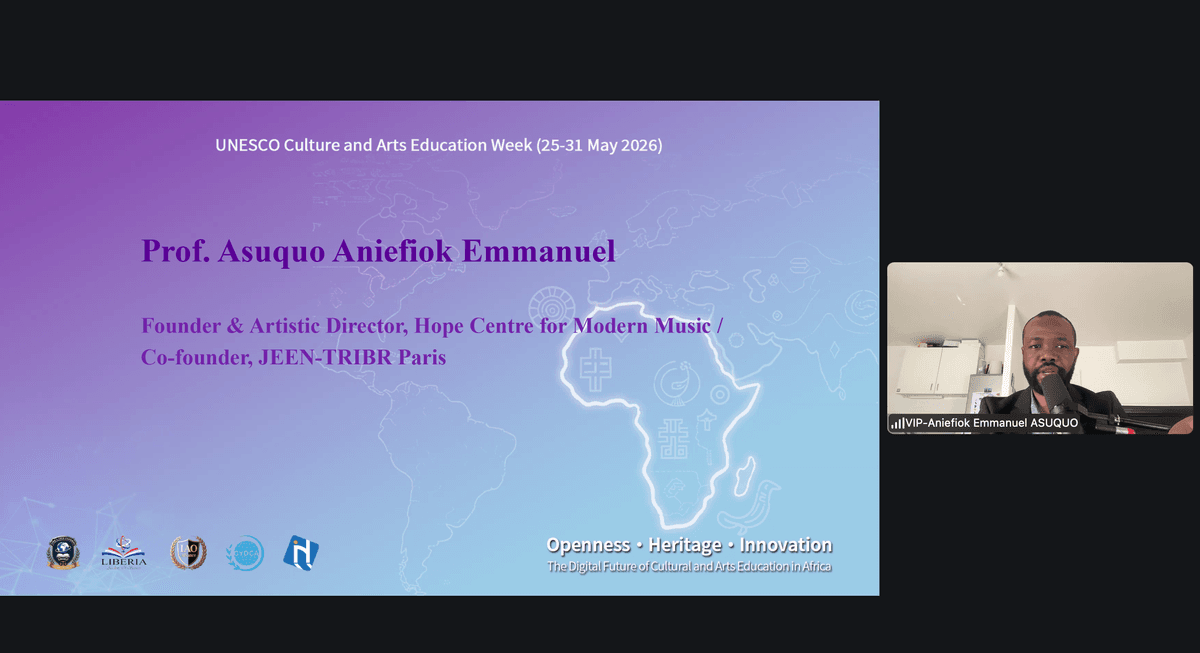
The session opened with remarks from Dr. Emmanuel Fred, President of the Liberia Academy of Sciences and Board Chairman of Africa Open University; Mr. Jing Zhang, Executive President of GYDCA; Prof. Asuquo Aniefiok Emmanuel, Founder of the Hope Centre for Modern Music; Prof. Dr. Yuguang Zhou, Director of the International Cooperation Center at China Agricultural University; and Mr. Liwei Zheng FRSA, Director of the International Academic Organizations Alliance.
Key Discussions and Insights
The keynote segment gathered contributions from across policy, education and the cultural sector, including Atty. Samuel G. Williams (Liberian National Commission for UNESCO), Mr. V. Marshall Sambolla (Ministry of Posts and Telecommunications, Liberia), Dr. Girma Andualem Anteneh (Ethiopia Anti-Corruption Commission), Mr. Stephen A. Essien (Ghana), Dr. Clinton Mutali Lichuma (Kenya) and Mr. J. Rufus Paul (Ministry of Information, Liberia), alongside Dr. Emmanuel Fred.
Speakers pressed the case for digital technologies and open educational resources (OER) in preserving and sharing cultural heritage, and a consensus took shape: innovation should not displace tradition but amplify and sustain it.
Discussions highlighted:
- the protection of oral traditions, local languages and intangible heritage
- the importance of community ownership and ethical digital documentation
- the role of youth as active creators of cultural narratives
- the need for stronger collaboration across institutions, educators and global partners
Youth Engagement and Dialogue
The webinar put considerable weight on youth participation, with young speakers contributing on intercultural learning, identity and global cooperation — reinforcing the point that youth are not just beneficiaries but key actors in shaping the future of cultural dialogue.
Outcomes and Future Directions
The event strengthened international partnerships among the organising institutions and participants, and produced a shared vision for advancing cultural and arts education in Africa through digital innovation and collaboration.