
Have you ever wondered how much of your family’s story you truly know? Beyond our names, where we come from and the traditions we celebrate, there may be stories that have travelled through generations, carrying memories, values and a sense of belonging.
Across some African communities, totems are part of these stories. They can connect families to their histories, identities and relationships with the world around them. In Zimbabwe, for example, some Shona-speaking communities recognise totems known as mitupo. Yet the meanings and practices associated with totems differ across Africa, reflecting the diversity of the continent itself.
As a young person, I believe this raises an important question: in a world that is constantly changing, are we making enough time to understand the cultural knowledge passed down to us? And what can we do to ensure that these stories remain meaningful for generations to come?
More Than Just an Animal or a Name
When people hear the word totem, they may immediately think of an animal. However, in communities where totemic traditions are practised, the meaning can go much deeper than the animal or symbol itself.
Totems can be connected to family identity, clan relationships, ancestry and traditional values. They may also help people understand their place within a wider family or community. Through praise names, oral histories and customary practices, these traditions can carry stories that have been shared long before the present generation was born.
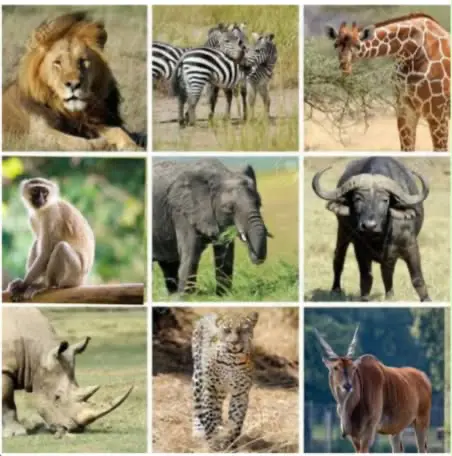
In Zimbabwe, for instance, some Shona-speaking communities use the term mutupo for a totem. Shumba, associated with the lion, Nzou with the elephant, Soko with the monkey and Mhofu with the eland are familiar examples. In some families, praise names, known as zvidawo, also form part of this cultural identity.
However, it is important to recognise that Africa is not one single culture. Not every African community practises totemism, and those that do may have different understandings, customs and histories. What a particular totem means to one family should not automatically be assumed to mean the same thing elsewhere.
What fascinates me is the way these traditions can carry memories across generations. A name may appear simple to someone unfamiliar with its history, yet for the people who identify with it, it may represent a connection to family, community and the past.
This makes me wonder how many stories are waiting to be discovered within our own families. More importantly, it makes me wonder whether we are asking enough questions while the people who carry these stories are still here to answer them.
Are We, as Young People, Losing Touch with Our Roots?
This is a question I believe deserves an honest conversation.
Today, young people are growing up in a world full of opportunities, new ideas and different cultural influences. We learn through technology, travel, education, music and social media. We connect with people across borders and discover ways of living that previous generations may never have experienced.
There is nothing wrong with embracing these changes. Being a young African should not mean limiting ourselves to the past or refusing to learn from other cultures. We can be modern, ambitious and globally connected while still appreciating where we come from.
At the same time, I sometimes wonder whether we give our own traditions the same attention we give to everything else.
Some young people know their family totem but may not understand the stories or customs associated with it. Others may have grown up far from their extended families and had fewer opportunities to learn from elders. Yet many young Africans continue to take pride in their heritage, participate in cultural activities and find new ways to keep traditions alive.
For this reason, I would not say that an entire generation has forgotten its roots. Our experiences are different, and cultural knowledge is still alive in many families and communities. The concern is whether some of that knowledge is being passed down as consistently as before.
When we stop asking questions, when family stories are no longer shared, or when we dismiss traditions without trying to understand them, we risk losing something that cannot always be recovered once the people who carry that knowledge are gone.
Perhaps the real question is not whether young people are abandoning culture, but whether we are creating enough opportunities for them to learn about it. If we want young people to value their heritage, we must make that heritage accessible, meaningful and relevant to their lives.
The Stories We Could Lose
This question becomes even more important when we consider how cultural knowledge is passed from one generation to the next.
Imagine sitting with a grandparent who knows the history of your family, the meaning of your praise names and the traditions associated with your identity. Imagine discovering that they have stories about your ancestors that you have never heard before.
Now imagine never asking.
As time passes, opportunities to learn directly from elders can become fewer. People move to different cities or countries for education and work. Families become separated by distance, and everyday life can leave little room for the conversations that once happened naturally.
In many communities, oral storytelling has been an important way of passing down history, values and knowledge. These stories are not always found in books. They live in conversations, songs, praise poetry, ceremonies and the memories of people who have carried them throughout their lives.
When those stories are shared, they give younger generations an opportunity to understand more than a name or a custom. They can reveal how families understand their history, how communities maintain relationships and why particular traditions matter.
I believe we should never underestimate the value of simply sitting down and listening. A question as small as “What is the story behind our totem?” could lead to a conversation that changes the way someone sees their family and cultural identity.
Our elders will not always be here to answer our questions. That is why we should make time for these conversations while we can. Listening is not only a way of learning about the past; it is also a way of showing respect to the people who have carried that knowledge.
Cultural knowledge survives when generations make time to listen to one another.
Can We Preserve Tradition Without Rejecting Modern Life?
Listening to elders is important, but preservation does not mean that young people must reject modern life. I believe we can respect tradition while continuing to grow, change and participate fully in the modern world.
Sometimes, cultural preservation is presented as though we must choose between traditional values and modern lifestyles. However, I do not think it has to be that way.
We can pursue education, build careers, use technology and embrace new ideas while remaining interested in our cultural heritage. We can learn from the world without losing curiosity about our own communities.
Culture is not something that must remain frozen in time. Traditions can change as people respond to new circumstances, and younger generations may find different ways of expressing the identities they inherit.
What matters is that change should not automatically mean forgetting.
For me, preserving culture means understanding it well enough to appreciate its value and make thoughtful decisions about how it continues. It means asking questions rather than dismissing customs simply because they are old. It also means recognising that not everyone will relate to a tradition in the same way.
Some people may practise particular customs closely, while others may approach them differently. Families and communities can have different interpretations, and these differences should be treated with respect.
We do not need to live exactly as our ancestors did to appreciate the knowledge they left behind. Instead, we can carry that knowledge forward in ways that are meaningful to our generation while remaining respectful of its origins.
Technology: A New Way to Keep Our Stories Alive
One way our generation can preserve cultural knowledge is through technology.
Think about how easily a smartphone can record a conversation, capture a photograph or create a video. These simple tools can help preserve stories that might otherwise remain within a small circle of relatives.
A young person could interview a grandparent about their family history. Another could create a blog explaining the traditions they have learned from their community. Someone else could record praise poetry or document a cultural gathering, provided the people involved give their permission.
Imagine young people from different African communities sharing their stories and learning from one another. Someone in Zimbabwe could introduce readers to aspects of Shona totemic traditions, while another young person could explain the cultural practices of their own community elsewhere on the continent.
Such exchanges could help people appreciate both the diversity of African cultures and the experiences that connect us as human beings. They could also help international readers understand Africa through the voices of the people who live its cultures, rather than through stereotypes or incomplete representations.
However, technology must be used responsibly. Recording something does not automatically give us the right to share it with the world.
Some cultural knowledge may be private, sacred or intended only for particular members of a community. Before recording or publishing stories, we should seek permission from the people sharing them and respect the wishes of those responsible for preserving that knowledge.
We should also avoid spreading information we have not checked or presenting one person’s understanding as the only version of a tradition.
Technology should help communities preserve their heritage on their own terms. It should not take control of their stories away from.
Digital storytelling can help preserve cultural knowledge when communities control how their stories are recorded and shared.
Learning to Respect Africa’s Cultural Diversity
As we use technology to share cultural knowledge, we must also be careful not to simplify or generalise the cultures we are presenting.
One of the things I find most valuable about learning about African heritage is discovering just how diverse our continent is.
Africa is home to many languages, communities, histories and cultural practices. Even within one country, people may have different customs and understand their traditions in different ways.
This diversity should encourage us to learn from one another rather than make assumptions.
When discussing totems, we should not suggest that every African community follows the same system. Nor should we treat one community’s traditions as more authentic or important than another’s.
A totem should never become a reason to mock someone, judge their worth or create divisions between people. Cultural identity can give us a sense of belonging, but it should also encourage us to appreciate the identities of others.
We can be proud of our own backgrounds without looking down on people whose traditions are different from ours.
For international readers, this is an important part of understanding African heritage: there is no single story that represents every African person. Each community has its own experiences, and the people who belong to those communities deserve the opportunity to explain their traditions in their own voices.
When we approach cultural heritage with curiosity and respect, we create opportunities for understanding across generations, communities and borders. We also make it easier for people from different backgrounds to recognize the value of their own heritage.
Africa’s cultural diversity is best understood by listening to communities tell their own stories.
What Can We Do as Young People?
Understanding the importance of cultural heritage is only the beginning. The next step is deciding what we can do to help preserve it.
We do not have to wait for a major cultural project before we begin. We can start with simple actions in our own homes, schools and communities.
We can ask our parents, grandparents and other knowledgeable relatives about our family histories. Where totems form part of our traditions, we can learn their names, meanings and associated praise names rather than simply memorising them.
We can make time for elders to share their stories, attend cultural gatherings and encourage younger family members to take an interest in their backgrounds.
We can also use our skills in writing, photography, filmmaking and digital communication to help preserve cultural knowledge. A thoughtful blog, a short documentary or a recorded conversation could encourage others to learn about traditions they may have overlooked.
Schools and community organisations can support these efforts by creating opportunities for storytelling, cultural exchange and intergenerational learning. Such activities should welcome different communities and allow people to share their knowledge in ways that feel appropriate to them.
Most importantly, we should approach this learning with humility. We will not know everything, and we may encounter different explanations of the same tradition. Instead of rushing to judge, we can listen, ask questions and seek guidance from people who understand the relevant cultural context.
Preserving heritage is not the responsibility of young people alone. Families, elders, educators, cultural institutions and communities all have a role to play. However, young people can help carry these traditions forward by choosing to learn about them and share them responsibly.
Our Heritage Deserves a Future
When I think about African totems, I think about the stories behind the names, the memories carried by families and the cultural knowledge that connects generations.
A tradition can be passed down for hundreds of years, but its future is not guaranteed simply because it existed in the past. It continues when people find meaning in it, learn about it and choose how to carry it forward.
Are young Africans losing touch with their cultural roots? In some families, opportunities to pass down traditional knowledge may be declining. In others, young people are actively reconnecting with their heritage and finding new ways to celebrate it. Both experiences deserve to be acknowledged.
What matters is that we do not allow distance, changing lifestyles or a lack of curiosity to prevent us from learning the stories that our communities are willing to share.
We do not have to know everything about our heritage today. We simply have to be willing to begin.
Ask an elder a question. Listen to a family story. Learn about a tradition that is unfamiliar to you. Share what you discover with care, and give others the same respect you would want for your own culture.
These actions may seem small, but they can help build a future in which cultural knowledge remains valued and communities retain the ability to tell their own stories.
Ultimately, preserving African totems is part of a wider conversation about identity, diversity and the importance of living heritage. It reminds us that progress does not have to come at the expense of memory, and that embracing the future does not require us to turn our backs on the past.
Our heritage is not simply a story left to us by those who came before. It is a living story that we can continue to learn from, share with respect and carry into the future.